

Hey there! As a supplier of Anchor Hinge Shafts, I often get asked about the hardness of these essential components. So, let's dive right in and explore what the hardness of an anchor hinge shaft really means.
First off, what's hardness anyway? In simple terms, hardness is a material's ability to resist deformation, especially when it comes to indentation, scratching, or wear. For an anchor hinge shaft, hardness is super important because it has to withstand a lot of stress and load in its day - to - day use.
When an anchor hinge shaft is used in marine applications, it faces all sorts of challenges. The salty seawater can be pretty corrosive, and the constant movement and forces exerted on the shaft can cause wear and tear. A shaft with the right hardness can better resist these factors and last longer.
Let's talk about the different types of hardness measurements. One of the most common ones is the Rockwell hardness test. This test measures the depth of penetration of an indenter into the material under a specific load. The result is a number on the Rockwell scale, and different materials and applications may require different Rockwell hardness values. For an anchor hinge shaft, a high Rockwell hardness number generally means better resistance to wear and deformation.
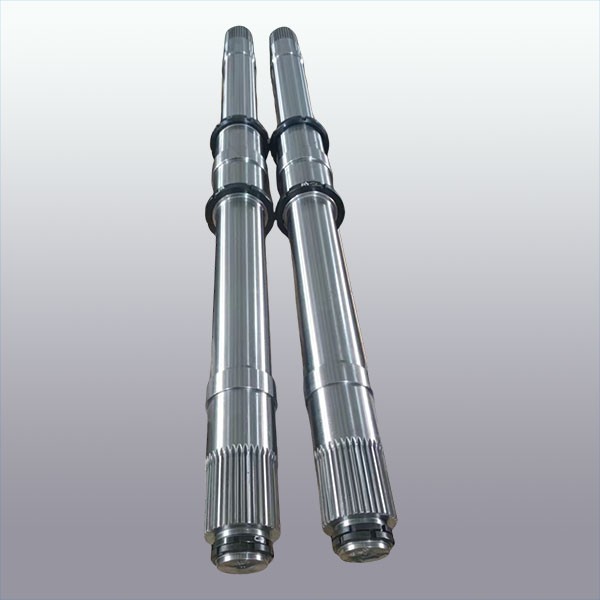

Another measurement is the Brinell hardness test. In this test, a hard ball is pressed into the material under a specific load, and the diameter of the indentation is measured. The Brinell hardness number gives an indication of the material's ability to withstand heavy loads.
The hardness of an anchor hinge shaft is also related to its material. Usually, these shafts are made from high - strength steels. Steel can be heat - treated to achieve different levels of hardness. For example, quenching and tempering are common heat - treatment processes. Quenching involves rapidly cooling the steel from a high temperature, which makes it very hard but also brittle. Tempering then follows to reduce the brittleness and make the steel more ductile while still maintaining a good level of hardness.
Now, let's compare the anchor hinge shaft with other types of shafts. For instance, the Marine Intermediate Shaft. While both are used in marine environments, the marine intermediate shaft is mainly responsible for transmitting power between different parts of the ship's propulsion system. It may require a different hardness level depending on the power it needs to transmit and the operating conditions.
The propeller shaft is another important component. It connects the engine to the propeller and is subject to high torque and thrust forces. The hardness requirements for a propeller shaft are also different from those of an anchor hinge shaft. The propeller shaft needs to be able to handle the dynamic forces generated by the rotation of the propeller, so its hardness is optimized for this specific function.
In the renewable energy sector, the Wind Turbine Main Shaft has its own unique hardness requirements. It has to support the weight of the blades and the nacelle and withstand the variable wind forces. The materials and hardness levels for wind turbine main shafts are carefully selected to ensure long - term reliability and performance.
As a supplier of anchor hinge shafts, we pay a lot of attention to the hardness of our products. We use advanced manufacturing techniques and strict quality control measures to ensure that each shaft meets the required hardness standards. We test every shaft using multiple hardness testing methods to guarantee its quality.
If you're in the market for anchor hinge shafts, it's crucial to understand the importance of hardness. A shaft with the right hardness will not only perform better but also save you money in the long run by reducing the need for frequent replacements.
When choosing an anchor hinge shaft, you should consider the specific application. If it's for a large - scale ship with heavy anchors, you'll need a shaft with a higher hardness to handle the greater loads. On the other hand, for smaller vessels, a shaft with a slightly lower hardness might be sufficient.
We also offer customization services. If you have specific hardness requirements or other special needs for your anchor hinge shafts, we can work with you to develop a solution that fits your exact specifications.
In conclusion, the hardness of an anchor hinge shaft is a critical factor that affects its performance, durability, and suitability for different applications. Whether you're in the marine industry or other sectors that use these shafts, understanding hardness can help you make a more informed purchasing decision.
If you're interested in our anchor hinge shafts or have any questions about their hardness or other aspects, don't hesitate to reach out. We're always here to help you find the best solution for your needs. Let's start a conversation and see how we can work together to meet your requirements.
References
- "Materials Science and Engineering: An Introduction" by William D. Callister Jr. and David G. Rethwisch
- Various industry standards and guidelines related to shaft manufacturing and hardness testing.