

As a seasoned screw supplier, I've encountered numerous inquiries about various screw specifications. One of the most frequently asked questions is, "What is the pitch of a screw?" Today, I'll delve deep into this topic, shedding light on its significance, measurement, and practical applications.
Understanding the Basics of Screw Pitch
The pitch of a screw refers to the distance between adjacent threads. It is a fundamental characteristic that determines how the screw will interact with the material it is being driven into and the mating component. In simple terms, pitch defines how far the screw will advance axially with one complete rotation.
There are two main types of screw pitch: coarse pitch and fine pitch. Coarse pitch screws have a larger distance between threads, which means they advance more quickly with each turn. They are commonly used in applications where speed is a priority, such as in construction or woodworking. Fine pitch screws, on the other hand, have a smaller distance between threads, resulting in a slower advance per turn. They are often used in applications that require precision, such as in machinery or electronics.
Measuring Screw Pitch
Measuring the pitch of a screw is relatively straightforward. You can use a pitch gauge, which is a tool specifically designed for this purpose. A pitch gauge consists of a set of blades with different thread profiles. To measure the pitch, simply select the blade that matches the threads of the screw and read the pitch value indicated on the gauge.
If you don't have a pitch gauge, you can also measure the pitch using a ruler. Place the screw on a flat surface and measure the distance between two adjacent threads. Make sure to measure the distance at the crest of the threads for the most accurate result. Divide this distance by the number of threads per inch (TPI) to get the pitch.
Importance of Screw Pitch in Different Applications
The pitch of a screw plays a crucial role in determining its performance in various applications. Here are some examples of how screw pitch affects different industries:
- Construction: In construction, coarse pitch screws are commonly used for framing and general fastening. Their large pitch allows for quick installation, which is essential when working on large-scale projects. Fine pitch screws, on the other hand, are used for more precise applications, such as installing cabinets or attaching hardware.
- Automotive: The automotive industry relies heavily on screws for assembly and maintenance. Coarse pitch screws are used for engine components and other high-stress applications, while fine pitch screws are used for electrical connections and other precision parts.
- Electronics: In the electronics industry, fine pitch screws are essential for securing small components and printed circuit boards. Their small pitch allows for precise alignment and ensures a secure connection.
- Manufacturing: Manufacturing processes often require the use of screws for assembly and adjustment. The pitch of the screw can affect the speed and accuracy of these processes. Coarse pitch screws are typically used for rapid assembly, while fine pitch screws are used for fine-tuning and calibration.
Induction Quenching Machine Tool for Screw Production
In addition to understanding the pitch of a screw, it's also important to consider the manufacturing process. One of the key steps in screw production is heat treatment, which can improve the strength and durability of the screw. An Induction Quenching Machine Tool is a specialized piece of equipment that uses electromagnetic induction to heat the screw and then quenches it to harden the surface.
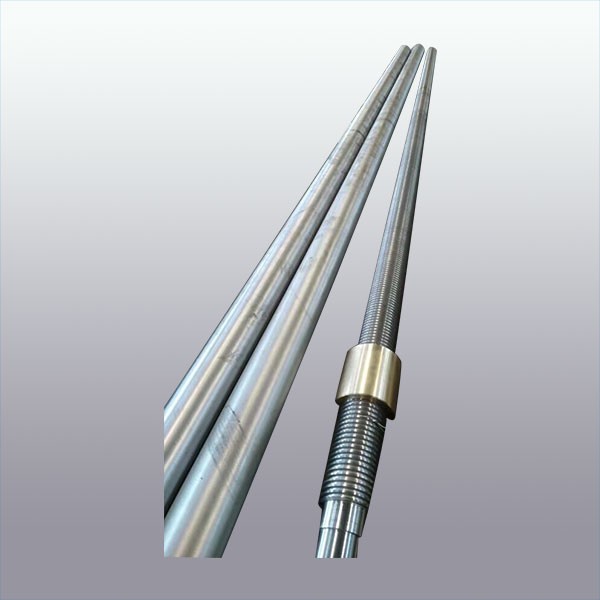
This process can significantly improve the wear resistance and fatigue strength of the screw, making it suitable for more demanding applications. By investing in an Induction Quenching Machine Tool, screw manufacturers can produce high-quality screws that meet the strict requirements of various industries.
Choosing the Right Screw Pitch for Your Application
When selecting a screw for your application, it's important to consider the pitch carefully. Here are some factors to keep in mind:
- Material: The type of material you are working with will affect the choice of screw pitch. Soft materials, such as wood or plastic, may require a coarse pitch screw for better grip, while hard materials, such as metal, may require a fine pitch screw for precision.
- Load: The amount of load the screw will be subjected to is another important factor. High-load applications may require a coarse pitch screw for increased strength, while low-load applications may be suitable for a fine pitch screw.
- Speed: If speed is a priority, a coarse pitch screw may be the better choice. However, if precision is more important, a fine pitch screw may be necessary.
- Mating Component: The pitch of the screw must match the pitch of the mating component for proper engagement. Make sure to check the specifications of both the screw and the mating component before making a selection.
Conclusion
In conclusion, the pitch of a screw is a critical parameter that affects its performance in various applications. By understanding the basics of screw pitch, measuring it accurately, and choosing the right pitch for your application, you can ensure that your screws will perform reliably and efficiently.
As a screw supplier, I am committed to providing high-quality screws that meet the needs of my customers. Whether you need coarse pitch screws for construction or fine pitch screws for electronics, I have the expertise and resources to help you find the right solution. If you have any questions or need assistance with your screw selection, please don't hesitate to contact me. I look forward to working with you and helping you achieve your goals.
References
- Machinery's Handbook, 31st Edition
- ASME B1.1-2019: Unified Inch Screw Threads
- ISO 68-1:2016: ISO general purpose screw threads -- Basic profile -- Part 1: Metric screw threads