

Hey there! As a supplier of marine couplings, I often get asked about the torque capacity of these crucial components. So, let's dive right in and explore what torque capacity means for marine couplings.
First off, what's torque? Well, torque is basically a measure of the force that can cause an object to rotate around an axis. In the context of marine couplings, it's the amount of rotational force that the coupling can handle without failing. This is super important because in a marine environment, there are all sorts of forces at play, like the power from the engine, the resistance from the water, and the vibrations from the moving parts.
The torque capacity of a marine coupling depends on several factors. One of the main ones is the material it's made from. We use high - quality materials like stainless steel and alloy steel in our couplings. Stainless steel is great because it's corrosion - resistant, which is a must in the salty marine environment. Alloy steel, on the other hand, offers high strength and can handle a lot of torque. For example, if you have a large ship with a powerful engine, you'll need a coupling made from a strong alloy to transfer that high - torque power from the engine to the propeller shaft without any issues.
Another factor that affects torque capacity is the design of the coupling. There are different types of marine couplings, such as flexible couplings and rigid couplings. Flexible couplings are designed to absorb some of the vibrations and misalignments that occur in a marine system. They can handle a certain amount of torque while also providing flexibility. Rigid couplings, on the other hand, are more suitable for applications where precise alignment is possible and a high - torque transfer is required. They're usually used in systems where the engine and the propeller shaft are well - aligned and there's not much room for movement.
The size of the coupling also plays a big role. Generally, larger couplings can handle more torque than smaller ones. This is because they have a larger surface area and more material to distribute the load. When you're choosing a marine coupling, you need to consider the size based on the torque requirements of your specific application. For instance, if you have a small boat with a relatively low - power engine, a smaller coupling might be sufficient. But for a large commercial vessel or a high - performance yacht, you'll need a much larger and more robust coupling.
Let's talk about how we test the torque capacity of our marine couplings. We use advanced testing equipment to simulate real - world conditions. We apply different levels of torque to the couplings and monitor their performance. We look for signs of wear, deformation, or failure. This way, we can ensure that our couplings meet or exceed the industry standards for torque capacity. We also take into account factors like temperature and humidity, as these can affect the performance of the coupling over time.
In a marine system, the coupling is like the bridge between the engine and the propeller shaft. If the torque capacity of the coupling is too low, it can lead to all sorts of problems. For example, the coupling might break under the high - torque load, which can cause the engine to lose power and the vessel to stop moving. This can be extremely dangerous, especially in the middle of the ocean. On the other hand, if you choose a coupling with a much higher torque capacity than you actually need, you're probably overspending and adding unnecessary weight to the vessel.

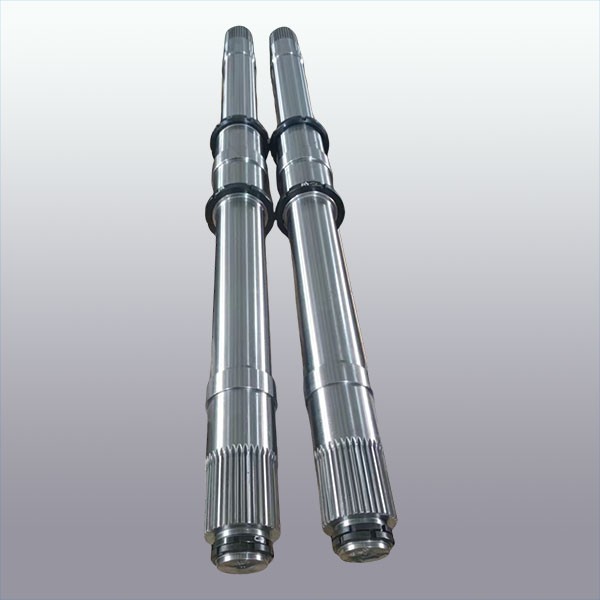
Now, marine couplings aren't just used in ships. They also have applications in other areas, such as Rudder Stock systems. The rudder is an important part of a ship, and it needs a coupling that can handle the torque required to turn it. A well - designed coupling with the right torque capacity ensures smooth and precise steering of the vessel.
In the renewable energy sector, marine couplings are also used in Wind Turbine Main Shaft systems. These turbines generate a lot of power, and the coupling needs to transfer that torque from the blades to the generator. The torque requirements in a wind turbine system are different from those in a ship, but the principle of choosing a coupling with the right torque capacity remains the same.
When it comes to choosing the right marine coupling for your application, it's important to work with a reliable supplier. That's where we come in! We have years of experience in the marine industry, and we know how to select the perfect coupling based on your specific torque requirements. We can provide you with detailed technical information and advice to help you make the best decision.
If you're in the market for a marine coupling, don't hesitate to reach out to us. We're here to answer all your questions and assist you in finding the coupling with the right torque capacity for your needs. Whether you're building a new vessel, upgrading an existing one, or working on a wind turbine project, we've got the expertise and the products to meet your requirements.
In conclusion, understanding the torque capacity of a marine coupling is crucial for the safe and efficient operation of any marine system. By considering factors like material, design, size, and application, you can choose the right coupling that will handle the torque load without any problems. And if you need any help with that, just give us a call or drop us an email. We're looking forward to working with you!
References
- Marine Coupling Handbook, Industry Publications
- Technical Documents on Marine Shafting Systems
- Research Papers on Torque Transmission in Marine Applications