

What are the quality standards for a stern tube?
As a stern tube supplier, I understand the critical role that stern tubes play in marine vessels. A stern tube is an essential component of a ship's propulsion system, housing the propeller shaft and allowing it to rotate smoothly while maintaining a watertight seal between the ship's hull and the sea. Ensuring the quality of stern tubes is not only crucial for the safety and efficiency of the vessel but also for compliance with international regulations. In this blog, I will delve into the key quality standards that stern tubes must meet.
Material Quality
The choice of materials for a stern tube is fundamental to its performance and durability. High - quality steel is typically the material of choice due to its strength, corrosion resistance, and ability to withstand high mechanical stresses. The steel should have a suitable chemical composition, with specific limits on elements such as carbon, manganese, sulfur, and phosphorus. For example, a lower sulfur content helps to improve the steel's ductility and weldability.
The steel used in stern tubes should also undergo proper heat treatment to achieve the desired mechanical properties. This can include processes like quenching and tempering, which enhance the hardness and toughness of the material. Non - destructive testing (NDT) methods, such as ultrasonic testing and magnetic particle testing, are commonly employed to detect any internal defects or surface cracks in the steel. These tests ensure that the material is free from flaws that could compromise the integrity of the stern tube over time.
Dimensional Accuracy
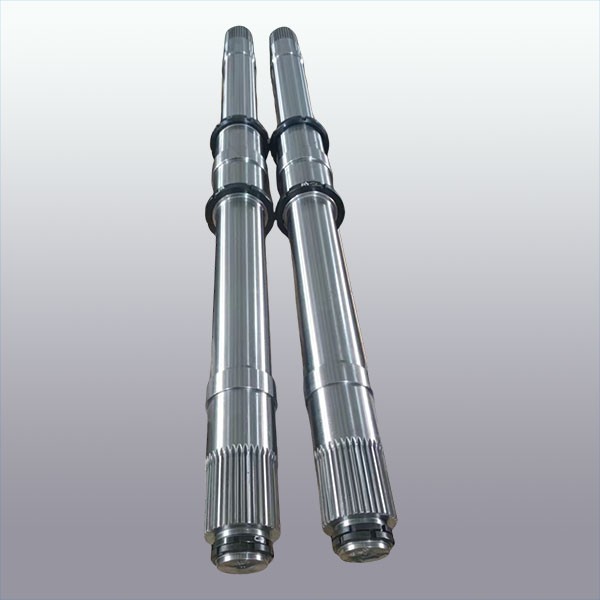
Precise dimensional accuracy is another crucial quality standard for stern tubes. The inner and outer diameters of the stern tube must be within strict tolerances to ensure a proper fit with the propeller shaft and the ship's hull. Any deviation from the specified dimensions can lead to problems such as excessive vibration, misalignment, and premature wear of the shaft bearings.
The length of the stern tube is also carefully controlled. It needs to be long enough to provide adequate support for the propeller shaft but not so long that it becomes structurally unstable or difficult to install. During the manufacturing process, advanced machining techniques and precision measuring instruments are used to achieve the required dimensional accuracy. This includes the use of computer - numerical - control (CNC) machines, which can produce parts with extremely high precision.

Weld Quality
In many cases, stern tubes are fabricated using welded components. The quality of these welds is of utmost importance, as they must be able to withstand the high stresses and forces encountered during the operation of the vessel. Welds should be free from defects such as porosity, lack of fusion, and cracks.
To ensure high - quality welds, welders must be certified and follow strict welding procedures. The welding process should be carefully controlled, including parameters such as welding current, voltage, and welding speed. Post - weld heat treatment may also be required to relieve residual stresses in the weld area. Non - destructive testing of the welds, such as radiographic testing and liquid penetrant testing, is carried out to verify their integrity.
Sealing Performance
A reliable watertight seal is one of the most critical functions of a stern tube. The seal prevents seawater from entering the ship's hull, which could cause corrosion and damage to the internal components. The sealing system typically consists of gland packing or mechanical seals.
Gland packing should be made of high - quality materials that can withstand the pressure and temperature variations in the stern tube environment. It should be properly installed and maintained to ensure an effective seal. Mechanical seals, on the other hand, offer better sealing performance and require less maintenance. They are designed to provide a tight seal even under high - speed and high - pressure conditions.
The sealing performance of the stern tube is tested using various methods, such as pressure testing. This involves applying a specified pressure to the stern tube and monitoring for any signs of leakage. The sealing system should be able to maintain its integrity over a long period, even in harsh marine environments.
Corrosion Resistance
Stern tubes are constantly exposed to seawater, which is highly corrosive. Therefore, corrosion resistance is a vital quality standard. A variety of methods are used to protect the stern tube from corrosion. One common approach is the application of anti - corrosion coatings. These coatings act as a barrier between the steel surface and the seawater, preventing the formation of rust and other forms of corrosion.
The type of coating used depends on the specific requirements of the vessel and the operating environment. Epoxy - based coatings are often preferred due to their excellent adhesion, chemical resistance, and durability. In addition to coatings, cathodic protection systems may also be installed. These systems use sacrificial anodes or impressed current to protect the stern tube from corrosion by providing a source of electrons to counteract the corrosion process.
Alignment and Balance
Proper alignment and balance of the stern tube and the propeller shaft are essential for the smooth operation of the vessel. Misalignment can cause excessive vibration, which not only affects the comfort of the crew but also increases the wear and tear on the shaft bearings and other components.
Alignment is typically checked during the installation process using specialized alignment tools, such as laser alignment systems. These tools can accurately measure the position and orientation of the stern tube and the propeller shaft, allowing for any necessary adjustments to be made. Balance testing is also carried out on the propeller shaft to ensure that it rotates evenly. Imbalances can lead to uneven forces acting on the shaft, which can cause vibration and damage to the stern tube and other parts of the propulsion system.
Compliance with International Standards
Stern tubes must comply with a range of international standards and regulations. These standards are established by organizations such as the International Maritime Organization (IMO) and classification societies like Lloyd's Register, DNV GL, and Bureau Veritas. These standards cover various aspects of stern tube design, manufacturing, and installation, including safety, environmental protection, and performance requirements.
Compliance with these standards is not only a legal requirement but also a mark of quality and reliability. It gives shipowners and operators confidence in the performance of the stern tubes and ensures that the vessels are safe and compliant with international maritime regulations.
In conclusion, the quality standards for stern tubes are comprehensive and cover multiple aspects, from material quality and dimensional accuracy to sealing performance and corrosion resistance. As a stern tube supplier, we are committed to meeting these high - quality standards to provide our customers with reliable and durable products.
If you are in the market for high - quality stern tubes or related products such as Wind Turbine Main Shaft, Marine Coupling, or Rudder Stock, we would be delighted to discuss your requirements. Contact us to start a procurement discussion and find the best solutions for your marine vessel.
References
- International Maritime Organization (IMO) regulations on marine propulsion systems.
- Classification society rules and guidelines (Lloyd's Register, DNV GL, Bureau Veritas).
- Technical literature on marine engineering and shipbuilding.